January 2016
Personal Individual Project
After brainstorming and reflecting on my experiences after frequent visits to my native village, I conceptualized a product to grow food in controlled optimal conditions to increase the nutritional value of food, increase yield while trying to lower the setup cost and be able to grow food in uncertain weather conditions.
This product was designed to perform experiments and to try things out, to verify whether the idea can be executed and of course because of the sheer joy of developing products. This undertaking allowed me to combine and expand my knowledge of electronics, design and manufacturing.
Design and Development
Product Requirements
Portability
- Compact to fit indoors.
- Ambient conditions shouldn’t affect energy consumption.
Cost
- Reduce the number of parts.
- Reduce energy consumption
- Use efficient, low energy consuming devices.
- Arduino Leakproof enclosure.
Light
- Plants need only blue and red lights.
- Use efficient lighting system – grow lights.
Water
- If the growth medium is compost, installed an irrigation system with a moisture sensor for feedback.
- Peristaltic/submersible pump to pump water, in the medium.
- Install an water container which can be filled manually.
Temperature and Aeration
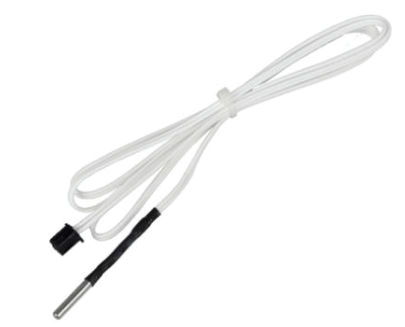
- Temperature sensors for feedback.
- Circulate air, to let in cold air and suck out hot air.
Growth Medium
- Compost.
- Hydrophonics technology.
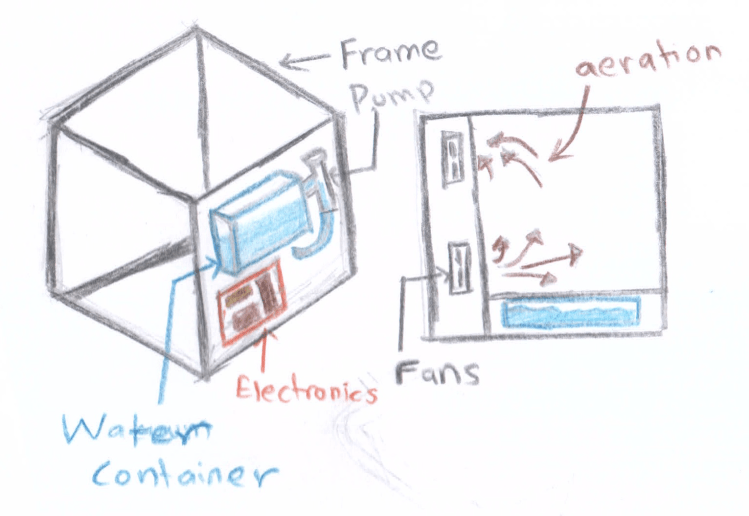
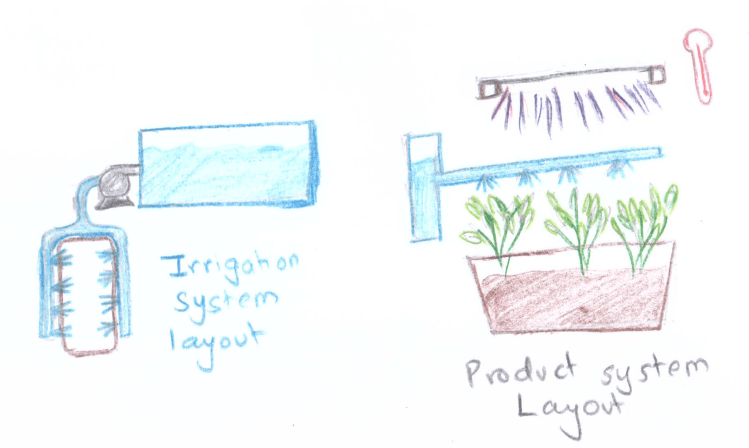

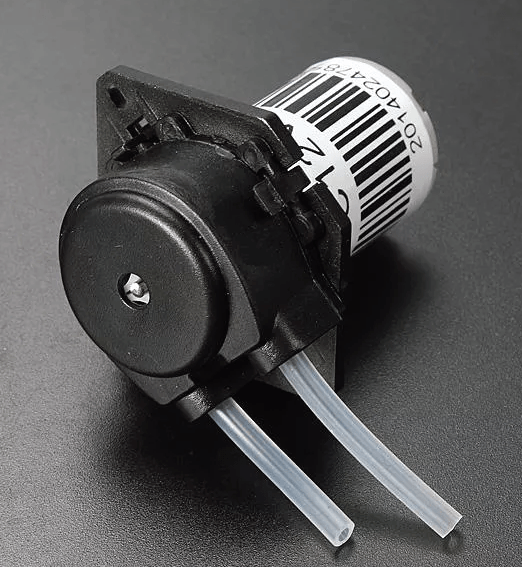
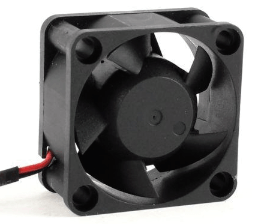

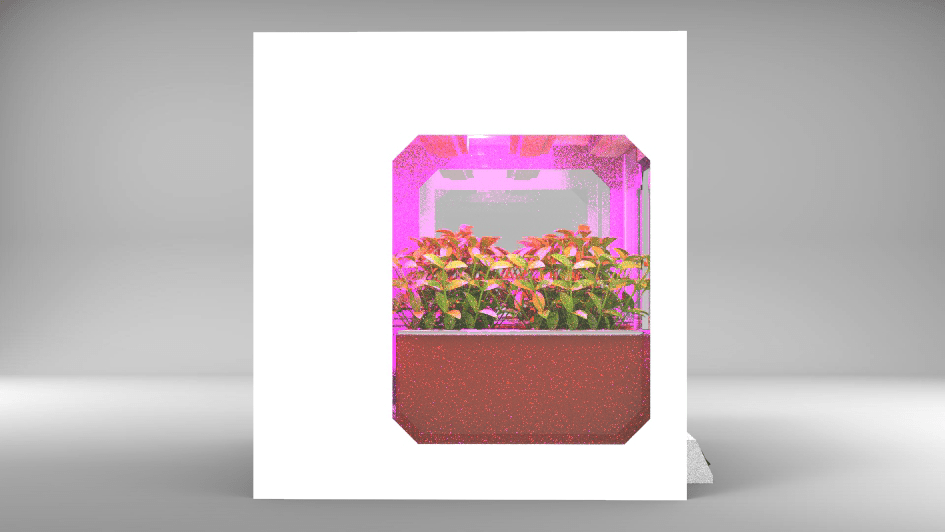
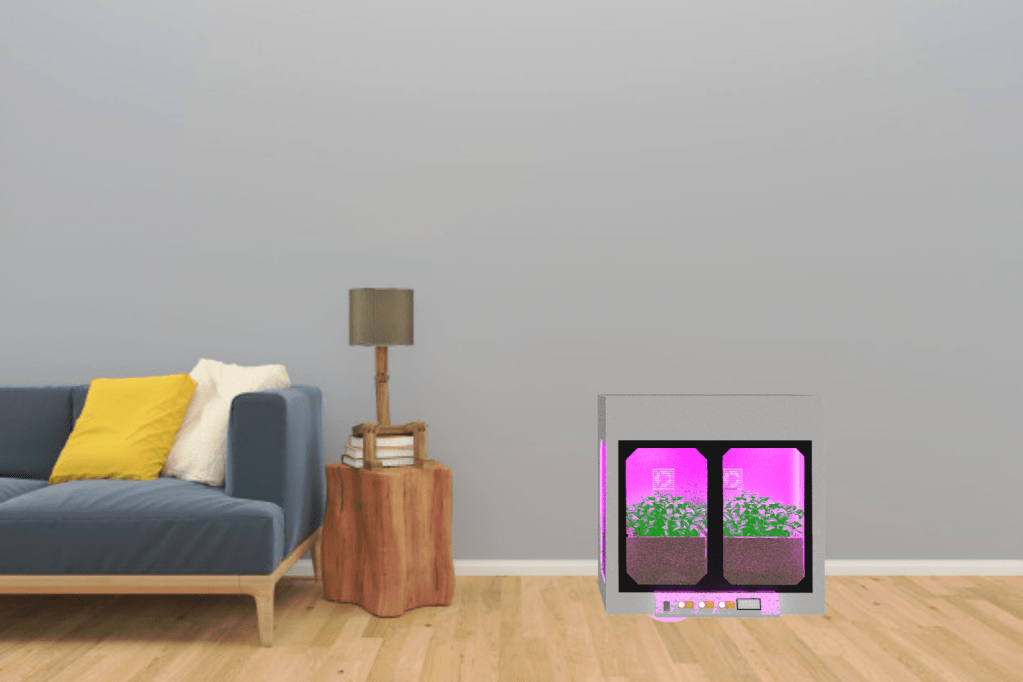
Product

Testing
- Experiments were done on Aliv (garden cress) and Mohri (black mustard) plants. However, both control and actual tests were performed at ambient temperature and humidity without temperature feedback control (Temperature ~24*C, February 2016).
- Grow lights were on through out the growth period.
- Soil moisture for ‘well watered’ was 50% and minimum was 30% below which water supply would switch ON.
- However after the tests, it was observed that growth rate was not much different for Garden Cress (3 days) and for Black Mustard (4-5 days).
However, such a technology could be scaled up: precise control of the environment – vertical farms or polyhouses/greenhouse – to grow crops with good nutritional value, and maximize yield. This is the first step towards making this technology affordable and accessible to people in developing countries.
 THE CHAITANYA HYPOTHESIS